The architecture is the interface
A field note on building systems where routing, memory, and execution share one visible grammar.
Atom Vibe Coder is open for visitors to experiment with: describe an app, let the thinking model assemble a small source project, then download what it creates.
Privacy is a core belief in how I build and what I build. I do not add analytics SDKs, advertising pixels, fingerprinting, session replay, or behavioral profiling to Atom projects.
YOUR ATTENTION IS NOT THE PRODUCT.Atom begins with the smallest useful mechanism. Keep the core dependency-free by default, prove one contract at a time, freeze what works, then create new behavior by composition instead of repeatedly rebuilding the engine.
THE RESULT: MECHANISMS THAT STAY UNDERSTANDABLE, CONTRACTS THAT STAY STABLE, AND SYSTEMS THAT CAN MOVE FROM IDEA TO FUNCTIONAL BUILD UNUSUALLY FAST.Each atom owns one bounded behavior. The orchestrator composes those atoms into a renderer, bus, database, browser, driver, or platform without hiding the seams between them.
ATOM → ATOM → ORCHESTRATOR → ENGINESEE THE ENGINES ↓Wrap the public boundaries with an atom kit and orchestrator. Add a missing feature, replace behavior at the seam, or use cryptographic action gates to suppress anything that lacks the required proof—without cracking the engine open.
ADAPTER → ORDERED ATOMS → SEALED ENGINEREAD THE TECHNIQUE ↗An adapter translates incoming or outgoing data into mathematical form. Ordered primitives edit that math, then the adapter recomposes it into valid data or pixels. The original can be transformed without becoming an opaque generated replacement.
DATA → MATH → ORDERED EDITS → DATASEE AV1 CODEC AVATAR ↗The same atoms in the wrong order can cancel one another, create artifacts, or weaken security. The orchestrator owns order, compatibility, fallbacks, and the proof that every stage received the form it expects. Dependency-free is the core ideal; hardware, operating-system, and sealed-engine boundaries remain explicitly named when outside dependencies are unavoidable.
Atom is where I publish the systems, experiments, and architecture I’m building—down to the smallest indivisible idea.
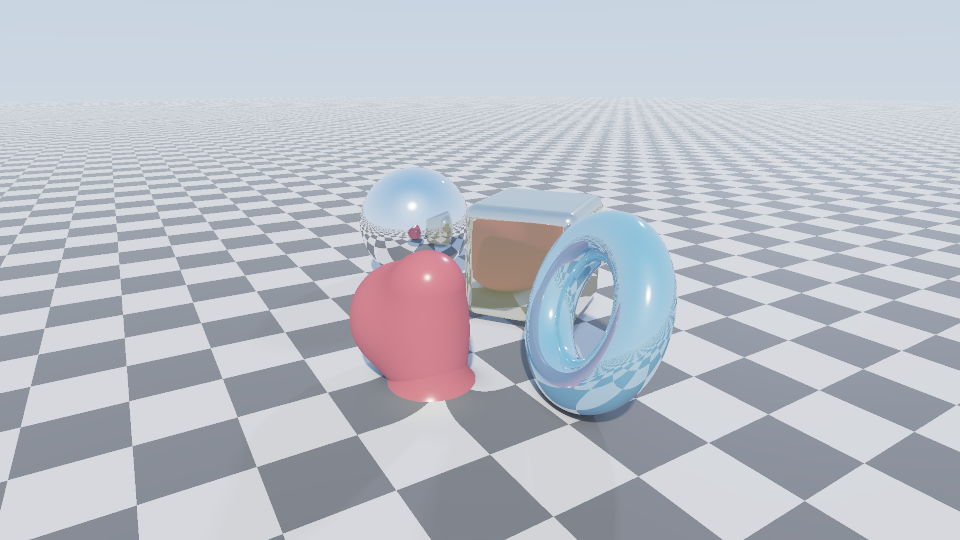
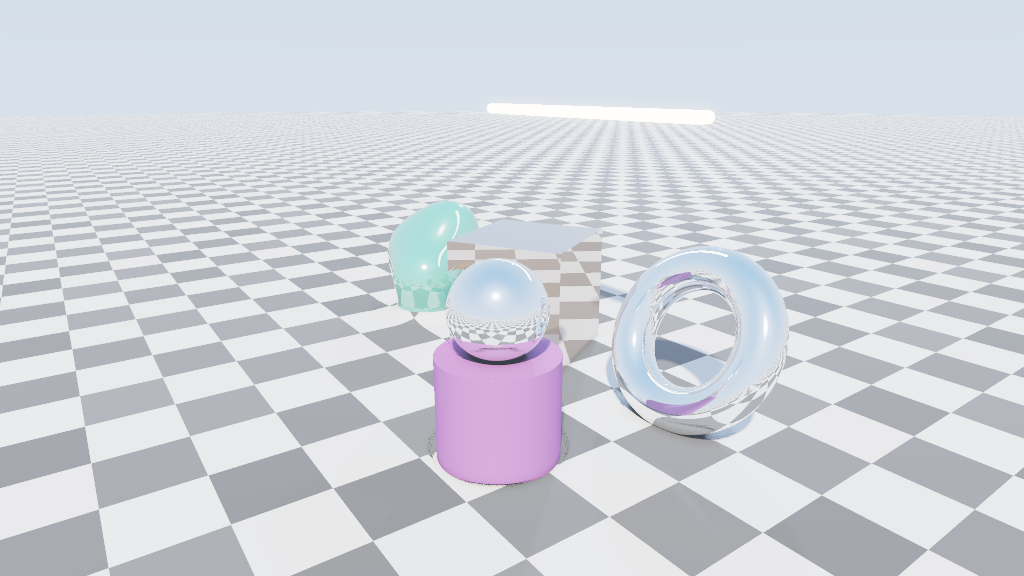
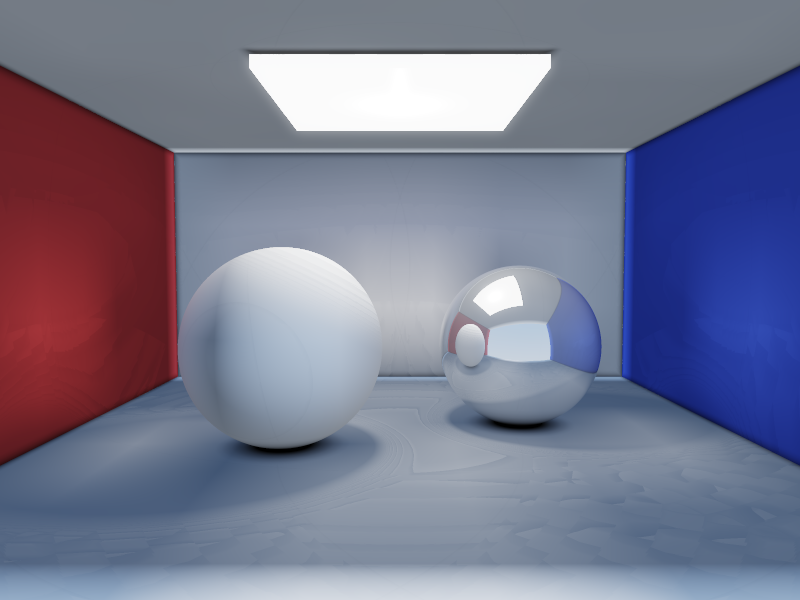
Explore the work ↓A real-time SDF and raymarching engine built from pure mathematical primitives in Rust. Drag the browser model to rotate and scroll to zoom.
A from-scratch 2D UI rendering engine built entirely from mathematical primitives—no browser engine and no GPU vector library.


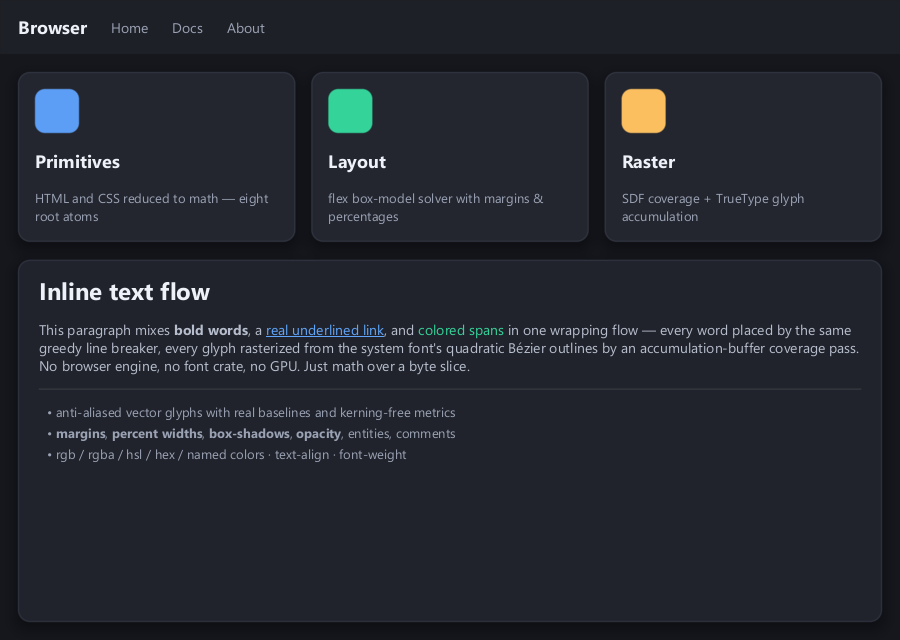
The controls above are a browser proof surface for visitors to explore the interaction model. Performance figures come from a fresh 40-frame release benchmark on the native CPU renderer; they are throughput measurements, not a display refresh-rate claim.
The finished Ordo bus spine: a three-dimensional fabric with six permanent, crypto-required lanes, sixteen reserved roads, self-announcing crates, and spider-owned orchestration.
ordo.apiCRYPTO REQUIRED · FAILS CLOSEDThis is not a flattened network graph. Ground-level transport, typed messages, flow, and orchestration remain structurally elevated while routes emerge from actual movement through the fabric. The dedicated feature links directly to the public Lucerna Labs source.
A browser built directly on the Atom Renderer. It fetches bytes, then drives Atom’s HTML parser, layout solver, SDF/scanline painter, TrueType rasterizer, and owned framebuffer without wrapping the completed engine in unnecessary orchestration.
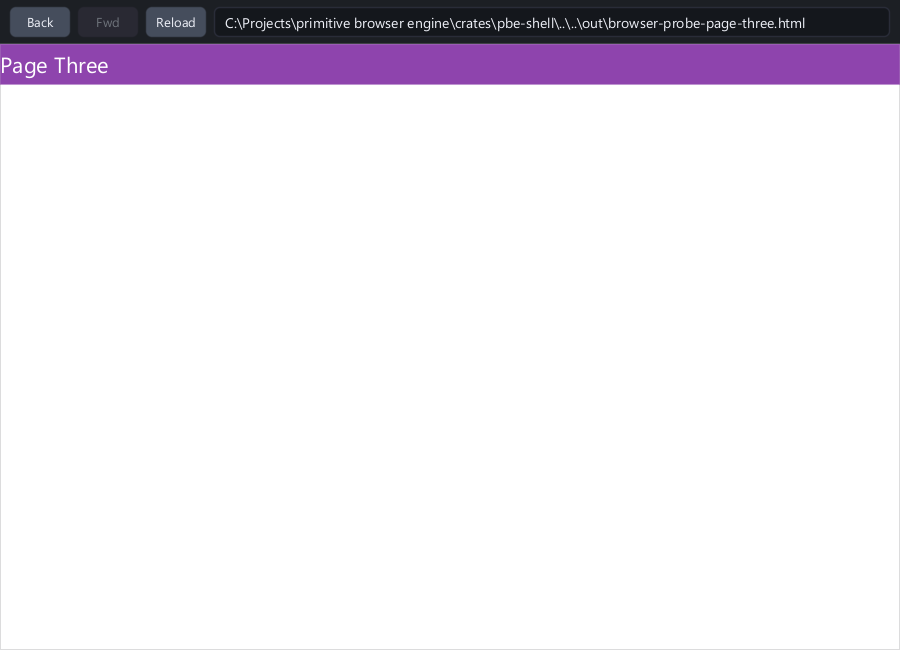
The frames inside this demonstration are authentic output from the combined Rust architecture. Browser concerns stay thin—navigation, history, fetching, and chrome—while Atom Renderer owns parsing, layout, paint, text, images, interaction, scrolling, and the final framebuffer.
A Spiderweb-bus-native local database peer with a conventional durable foundation and atom-composed intelligence: vector, sparse, graph, and learned-outcome signals fused into one ranked answer.
Hybrid means every boundary stays honest. SQLite owns durable pages; atoms build the query intelligence; the Ordo RAG peer exposes ingest, query, collection, and feedback messages on Spiderweb’s typed local-street layer. The current source is bus-native at L1, not yet the complete L2/L3 emergent-thread and orchestration fabric.
A cross-domain atom collider disguised as a weight codec: signal transforms, DSP repair, information theory, vector geometry, and integrity mechanisms compose around adaptive Q2/Q4/Q8.
The last inference-validated baseline is a 2.51× v0.2.2 snapshot. The older 10.66× KL-only result failed real inference and is preserved publicly as a post-mortem, not advertised as performance.
An under-development Redox OS research lab converting driver and GPU responsibilities into bounded atoms with explicit orchestration and evidence.
Explore the focused crate constellation, the repo-selection audit, the interactive composition model, and the fresh Redox launch evidence.
The claim stays bounded: implemented driver and VirtIO-GPU subsystems, not a finished conversion of the entire Redox kernel. The public repository is clearly marked under development.
A local-first AI operations center for providers, tools, agent teams, memory, retrieval, and automation—bounded by visible capabilities and explicit operator approval.
Fresh validation confirms the core compile, runtime smoke test, Studio production build, and full runtime harness. One formatting gate remains open, so Ordo is presented honestly as active beta software.
The public Vibe Coder is the hands-on part of the journal. Give it an idea within the tested simple-to-moderately-difficult range, inspect the generated project, and take the source ZIP home.
START AN EXPERIMENT ↓A thinking-model harness built to hold architecture, constraints, reference patterns, and proof boundaries in view while an AI turns an intent into a downloadable source project.
That is the range tested so far. The upper capability boundary has not yet been measured.
Enter an intent to generate a small source project, then download it as a ZIP.
Each successful hosted run packages the generated source files into a ZIP that stays on the visitor’s device. This web demo does not compile or test the result. A standalone personal-use edition is planned for release within the next few days, so users can run the harness with their own model and limits.
My first application: a Rust-native, radio-first creator command center designed as a lightweight alternative to hardware-hungry creator stacks.
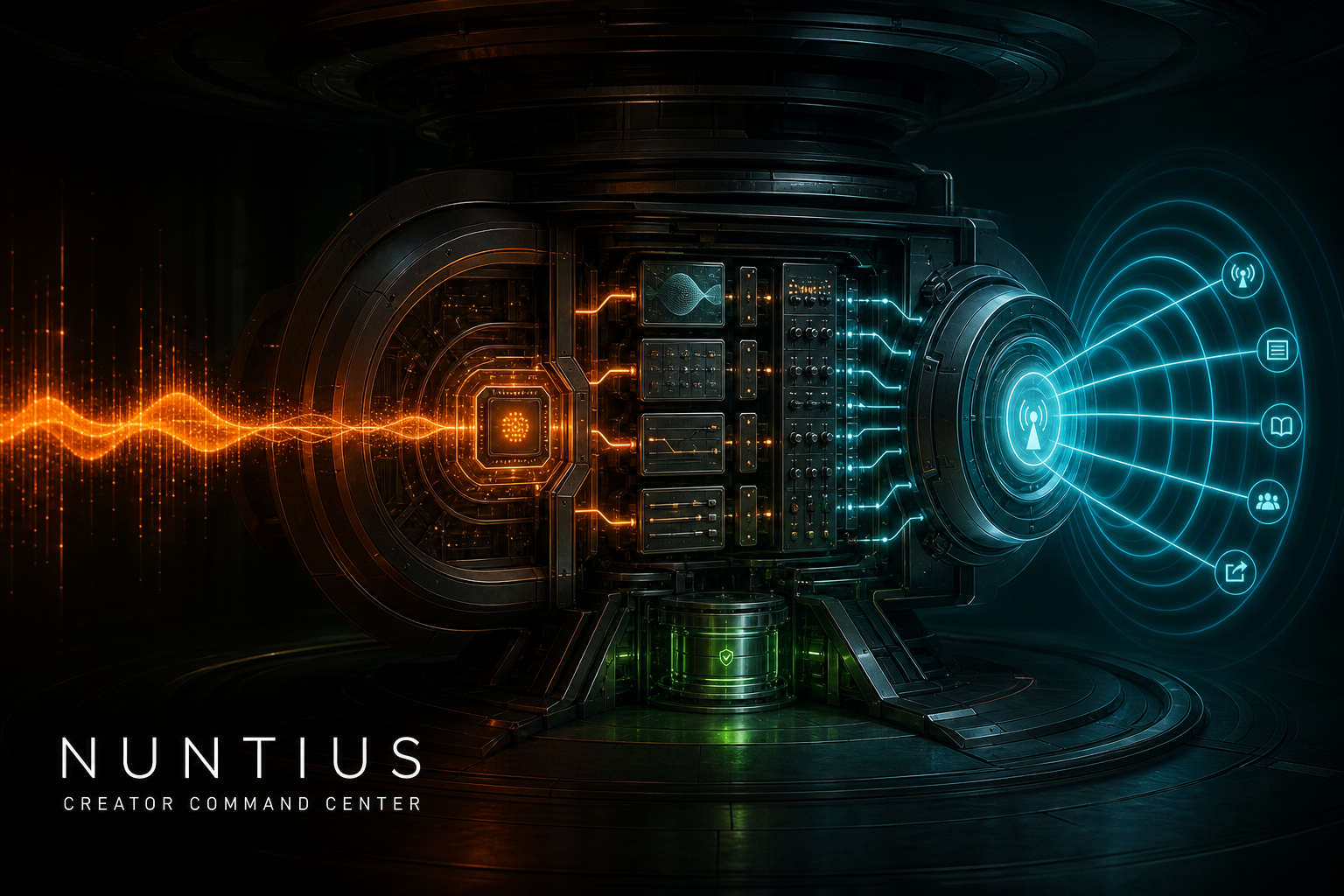 FIRST APPLICATION · ON AIR
One Rust workspace. Embedded redb. Compiled templates. Optional plugins that stay absent when disabled. A station and publishing surface without the service pile.
Emergent composite behavior through episodic memory. Small models specialized by scars. Cross-domain routing that can create capability—or interference.
Meet Mother AI, the Small Model Memory Lab, and the Synthetic Memory Specialist—with every result labeled by the kind of evidence that produced it and every dual-use boundary made visible.
ENTER THE RESEARCH INDEX ↗Emergent composite behavior observed in structural simulation; selected reconstruction details intentionally withheld.
Prompt memory, structural LoRA, primitive caches, and activation steering.
Matched domain memories, cross-domain coexistence, and interference.
A real 802.11a/g software-radio stack composed upward from mathematical primitives instead of hidden vendor firmware.
The project builds the chain itself: frame synchronization and OFDM, all eight 802.11a/g rates, CSMA/CA and association, WPA2-Personal, a HackRF backend, a Linux TAP path, and a mac80211 SoftMAC module.
The mathematical, protocol, and deterministic simulation paths are verified. The Linux kernel module and live over-the-air hardware path remain experimental; the current GPL C shim is a transitional boundary that will be replaced as the kernel path is converted into atoms.
OPEN THE WI‑FI DRIVER ON GITHUB ↗Every card includes a current GitHub source-footprint measurement. Established repositories use GitHub’s repository-size field; newly indexed repositories use their exact Git tree. AV1 Codec Avatar is explicitly measured as a documentation-only recovery record. This is source footprint—not executable, installed, model, or local build size. Snapshot measured July 11, 2026.
CPU and GPU SDF rendering, CSG, global illumination, physics, animation, and mesh ingestion.
The zero-dependency 2D renderer, TrueType engine, layout system, HTML/CSS front end, and widget runtime.
Frozen crypto-required lanes, living orchestration, P2P/NAT/cloud routes, 3D topology, and RF repair.
A full-stack 802.11a/g software-radio driver composed from OFDM, MAC, WPA2, HackRF, TAP, and mac80211 layers.
The self-contained Rust browser shell, network on-ramp, PMRE renderer elevation, HTML/CSS, images, links, and scrolling.
The implemented vector, sparse, graph, and learned-outcome fusion surface inside the public Ordo repository.
Cross-domain adaptive Q2/Q4/Q8 research with its failed and surviving evidence preserved.
A codec-native transform → math → edit → recompose experiment, published as an honest architecture record while its source is reconstructed.
The selected bounded kernel and VirtIO-GPU atom research lab.
The local-first AI operations center, mode intelligence, security boundaries, and provider gateway.
A thinking-model coding harness. Recommended minimum: Qwen3.5-9B Q8, currently tested on simple to moderately difficult apps; the upper capability boundary remains untested.
The Rust-native radio and creator command center that came before Atom.
Adaptive defensive VPN clustering, hybrid PQC, dynamic hardening, and deterministic failover.
Workload-driven GPU memory tiering across heterogeneous devices.
The episodic-memory identity experiment studies emergent composite behavior while intentionally withholding dual-use reconstruction details.
The executable scar-routing experiment is linked for authenticated repository access.
Memory-shaped behavior, structural primitives, LoRA methods, scar routing, corpora, and lightweight evaluation evidence.
PolyForm is the repository default across the collection. Earlier MIT grants remain valid, and the Wi‑Fi driver’s transitional Linux kernel C shim keeps its explicit GPL‑2.0 file-level designation until that path is converted into atoms.
READ THE TERMS ↗Architecture explained from first principles, with diagrams, models, and working demonstrations.
A field note on building systems where routing, memory, and execution share one visible grammar.
What changes when infrastructure learns from the traffic that moves through it?
Elevating mathematical primitives into real-time SDF geometry, lighting, physics, and motion.
Jesse G Alicea
Digital media + multimedia student
Independent systems builder
I’m Jesse G Alicea, a middle-aged digital media and multimedia student trying to build a self-employed future. I did not begin as a programmer, and I still do not pretend to know every piece of technical jargon.
I began with a regular person’s problem: the tools I needed were expensive, fragmented, invasive, and increasingly difficult to own. Atom grew from the decision to stop accepting those walls as permanent.
A working name for the path I am building—not yet a formal or registered business.
I created Lucerna Media as the name for the independent path I wanted to follow. Almost immediately, I ran into walled gardens: Adobe’s subscription model, NVIDIA’s pricing and hardware ecosystem, cross-compatibility failures, privacy questions, security tradeoffs, and the constant feeling that every useful tool wanted another fee.
I felt overwhelmed, nickel-and-dimed, and tired of asking permission from software and hardware I was already paying to use.
I was tired of Python and the brittleness I experienced when projects grew beyond quick scripts. I turned to Rust, built a Tokio-based bus, and finally made my first applications. That was a breakthrough—but it still did not solve the larger problem.
So I stopped asking how software was normally assembled. I designed my first Atom application around a simpler question: what happens if a system is broken into its smallest useful mathematical parts, those parts stay visible, and everything else is composed upward?
I did not know how to write conventional code or explain the design in the language software engineers expected. The AI coders did not understand it either. They repeatedly pulled it back toward familiar patterns. More than once, I was told the complete idea sounded like decades of work for a team of a hundred engineers.
I wrote dozens of instruction skills. I turned architecture into analogies. The Spiderweb Bus gave the model roads, intersections, lanes, vibrations, and a spider that could manage traffic. Eventually, I got a rough prototype working, carried it into every new session as a reference, and refined it until the model could see the same architecture I saw.
Even then, drift was the real enemy. Keeping an AI focused on an unfamiliar design—instead of watching it snap back to pattern matching—was harder than imagining the application itself.
The Atom Vibe Coder harness came from that fight. It exists to keep the architecture, constraints, reference implementation, and user permission boundary present while an AI coder works.
I designed the Atom family in roughly two months. Most projects reached a functional first version in a day, then were tested, corrected, and polished over the following week. Speed was never the only priority. I wanted the results to be understandable, user-friendly, and visually appealing because powerful software should not have to be ugly or hostile.
Everything is math. Break a system down far enough and you can understand it—then rebuild it into what you need, within the laws of physics.
This is my constructive revenge on a system I find appalling: a regular person turned student, hobbyist, and builder, on a path of retribution against needless lock-in, artificial scarcity, and tools that make their users feel small.
REGULAR PERSON → STUDENT → HOBBYIST → BUILDERI publish the important work with source because I want people to study it, improve it, and fork it under clear terms. PolyForm Small Business 1.0.0 is the current repository default; each license file remains the authority, earlier MIT grants remain valid, and explicitly marked component exceptions remain in force.